Philippines, Japan advance strategic oil reserve plan
- June 1, 2026
- 0
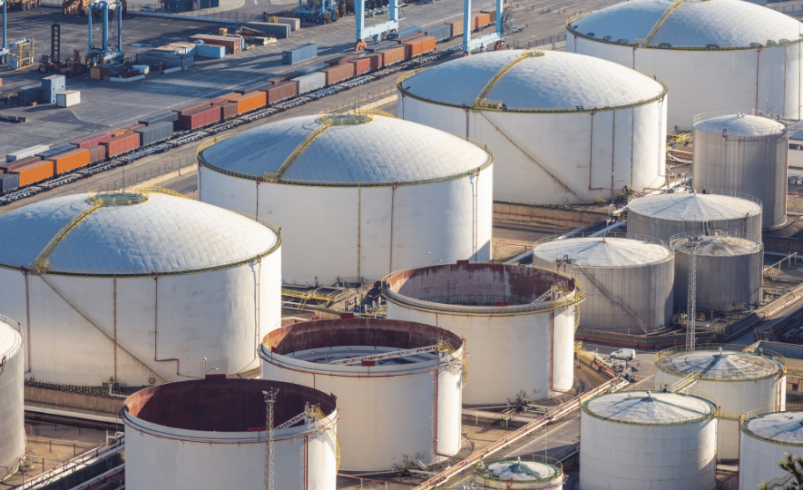
The Philippines and Japan have agreed to deepen cooperation on strategic oil stockpiling, a move that could pave the way for the country’s first government-supported petroleum reserve system and strengthen regional energy security efforts across Southeast Asia.
The initiative emerged as one of the key outcomes of President Ferdinand Marcos Jr.’s state visit to Japan on May 28, where Manila and Tokyo reaffirmed their commitment to improving energy security and supply chain resilience amid growing geopolitical uncertainties in global energy markets.
Under the agreement, Japan’s Ministry of Economy, Trade, and Industry (METI) and the Department of Energy (DOE) will expand collaboration through the Partnership for Wider Energy and Resources Resilience in Asia (POWER Asia), focusing on the development of national oil stockpiling systems and a proposed ASEAN-wide joint stockpiling framework.

For the Philippines, the cooperation supports ongoing efforts to establish a Strategic Petroleum Reserve (SPR) Program — a long-discussed initiative that would provide an additional government-controlled fuel buffer during major supply disruptions, natural disasters, or geopolitical crises.
“Energy security is a national priority. The goal is simple: to ensure that the Philippines has sufficient fuel supply to withstand disruptions in the global market and to protect our economy, industries, and households from external shocks,” Energy Secretary Sharon Garin said in a statement
The DOE said it is working with the Philippine National Oil Company (PNOC) and the Maharlika Investment Corporation (MIC) to evaluate options for developing the reserve system.
The proposed program would complement, rather than replace, fuel inventories currently maintained by private oil companies under the country’s deregulated downstream oil industry.
DOE said industry inventories currently cover about 15 days of mandatory stock requirements, although actual inventories can exceed 30 days depending on market conditions. The government is studying options to create an additional strategic reserve that could be tapped during extraordinary supply emergencies.
“For decades, the country has relied primarily on commercial inventories. What we are studying is how the government can establish an additional layer of protection through a strategic reserve that will help ensure sufficient supply during extraordinary circumstances,” Garin said.
The DOE, PNOC and MIC are finalizing an agreement that will define each institution’s role in developing the program. PNOC is expected to provide technical and industry expertise, while MIC will help assess financing structures and investment options.
According to the DOE, feasibility studies, site assessments, financing mechanisms and implementation models are now being prepared. Initial evaluations suggest the project could be rolled out in phases, allowing the government to gradually build strategic fuel inventories over time.
A technical mission from Japan involving government agencies and private-sector partners is expected to visit the Philippines later this year to support planning and feasibility activities.
Japan has committed to provide technical assistance, capacity-building programs and feasibility support, drawing on its experience in developing and managing strategic petroleum reserves.
The cooperation is expected to involve the Economic Research Institute for ASEAN and East Asia, Japan Organization for Metals and Energy Security, Japan Bank for International Cooperation, as well as Japanese trading firms and engineering companies with expertise in stockpiling infrastructure.
Beyond the national reserve initiative, the Philippines is also participating in discussions on an ASEAN-wide joint stockpiling mechanism aimed at strengthening regional preparedness for fuel supply disruptions.
As ASEAN chair this year, the Philippines has been promoting regional energy security initiatives and exploring opportunities to host future strategic stockpiling facilities should member states pursue a collective reserve system.
“This is one of the important opportunities arising from our engagement with ASEAN and our international partners. We are not only strengthening our own energy security but also contributing to broader regional efforts to ensure reliable and resilient energy systems across Southeast Asia,” Garin said.
DOE said recent global market disruptions have highlighted the importance of maintaining strategic petroleum inventories to support critical sectors such as transportation, manufacturing, food production and household consumption.
“While global oil prices are influenced by international market conditions, one of the government’s most important responsibilities is ensuring that the country maintains access to fuel supplies when disruptions occur elsewhere in the world,” the energy chief said.
“This initiative is about protecting the continuity of supply. It is about ensuring that Filipinos can have confidence that fuel will remain available when they need it, even during periods of global uncertainty,” Garin added.
The strategic reserve initiative forms part of the Marcos administration’s broader push to strengthen energy security and reduce the country’s vulnerability to external supply shocks as fuel demand continues to support economic growth.
What are your thoughts on the Philippines’ plan to establish a strategic petroleum reserve? Could a government-backed fuel stockpile improve the country’s energy security and resilience during future supply disruptions?
Follow Power Philippines on Facebook and LinkedIn or join our Viber community for more updates.