RE Compass platform aims to close data gaps in PH energy transition
- June 30, 2026
- 0
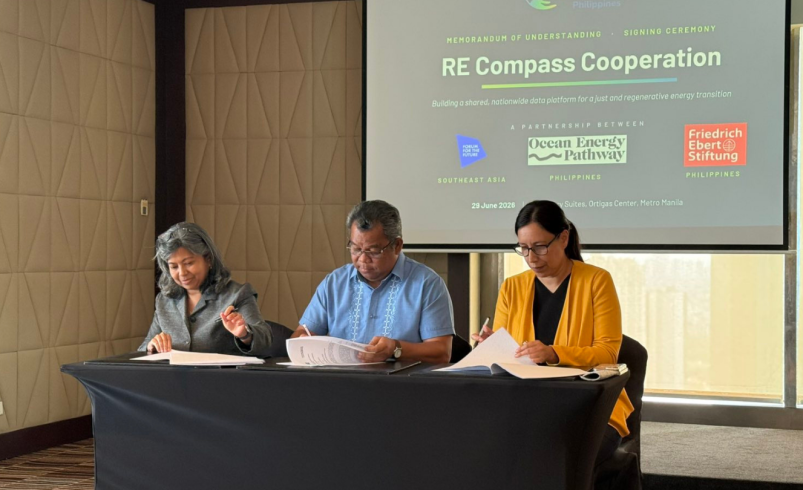
Forum for the Future, Ocean Energy Pathway, and Friedrich-Ebert-Stiftung Philippines have signed a two-year agreement to develop RE Compass, a data-sharing and governance platform aimed at supporting a more responsible renewable energy transition in the Philippines.
The platform is designed to provide renewable energy developers, policymakers, and host communities with shared and credible data on proposed project areas. These include biodiversity, natural resources, and potential social impacts.
The groups pointed out how renewable energy development in the Philippines is moving quickly, but independent and consolidated data on biodiversity, ecosystem services, and social impacts remains limited.

This can affect how projects are planned, permitted, and accepted by host communities, especially in areas involving biodiversity hotspots, ancestral domains, grid corridors, and coastal communities.
“Renewable energy development in the Philippines is moving fast, but speed without the right information creates risks for communities and ecosystems alike,” said Sumi Dhanarajan, Managing Director for Southeast Asia at Forum for the Future.
“RE Compass is about making sure that the actors involved in RE development have the information to manage environmental and social risks, and that the people most affected have a role in determining the decisions,” she added.
RE Compass aims to show where renewable energy projects are being proposed and what environmental or social conditions exist in those areas. The groups said the platform will give developers, government, and communities a common basis for identifying risks and deciding where interventions are needed.
Natalia Figge, Country Director of Friedrich-Ebert-Stiftung Philippines, said the platform is also meant to combine credible data with participatory approaches before site decisions are made.
“The information that should guide where renewable energy projects are developed is often fragmented, and the perspectives of affected communities are not always reflected early in decision-making,” Figge said.
“RE Compass aims to bring these elements together by combining credible data with participatory approaches before site decisions are made. An energy transition is more likely to succeed when it is informed by sound evidence and shaped through inclusive dialogue,” she added.
The collaboration will run through March 2027 and will be developed in three phases.
The first phase will focus on building the coalition and consolidating datasets on biodiversity hotspots, ancestral domains, and grid corridors. The second phase will introduce a prototype digital platform in a selected area to test data-sharing frameworks with local government units and coastal communities.
The final third phase will aim to socialize the platform and embed it within the national data infrastructure, complementing existing government permitting systems.
Ocean Energy Pathway Philippines Country Head Rizaller “Jun” Amolo said the platform could also support the country’s offshore wind sector by improving information-sharing among coastal communities, developers, local governments, and national agencies.
“This platform promotes transparency and open dialogue among stakeholders, ultimately fostering trust among the key actors of the offshore wind sector,” Amolo said.
“Access to credible data and early, meaningful community participation in the development process are crucial for building buy-in, which is essential for the success of the offshore wind sector,” he added.
Forum for the Future is an international sustainability nonprofit that convened the Responsible Energy Initiative Philippines in 2023, while Ocean Energy Pathway supports offshore wind development globally. Friedrich-Ebert-Stiftung Philippines works with government institutions, trade unions, academe, civil society, and other partners on dialogue, evidence-based policymaking, social justice, and inclusive development.
How can better data and early community participation support a more responsible renewable energy transition in the Philippines?
Follow Power Philippines on Facebook and LinkedIn or join our Viber community for more updates.