Solar and storage take center stage as industry leaders map Philippines’ energy future
- June 1, 2026
- 0

More than 300 energy executives, investors, policymakers, and technology providers gathered in Manila to discuss how solar and battery storage can strengthen energy security, improve grid resilience, and drive the next wave of renewable energy investments in the Philippines.
The 3rd Solar and Energy Storage Future Philippines 2026 brought together over 60 speakers from government agencies, utilities, renewable energy developers, financial institutions, and technology providers to examine the opportunities and challenges shaping the country’s energy transition. The conference was organized by Energy Box and held on May 18 in Manila.
A recurring theme throughout the event was the growing role of solar and energy storage in addressing rising electricity demand, reducing dependence on imported fuels, and supporting long-term energy security.

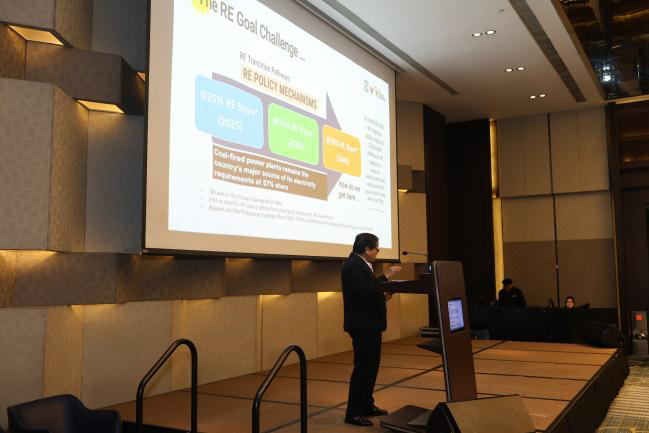
Opening the conference, Department of Energy Undersecretary Mylene Celestino Capongcol highlighted the Philippines’ renewable energy ambitions and the critical role of energy storage in achieving them.
Capongcol noted that the Philippines remains one of the world’s most attractive emerging renewable energy markets and has identified more than 90 GW of solar potential. The country plans to add 25 GW of renewable energy capacity between 2027 and 2035 through programs such as the Green Energy Auction Program, Green Energy Option Program, and net metering initiatives.
Energy storage is expected to play a growing role as renewable energy penetration increases.
Large-scale renewable energy projects are now required to include at least 20% energy storage capacity, reflecting the government’s push to strengthen grid stability while integrating more solar and wind power.
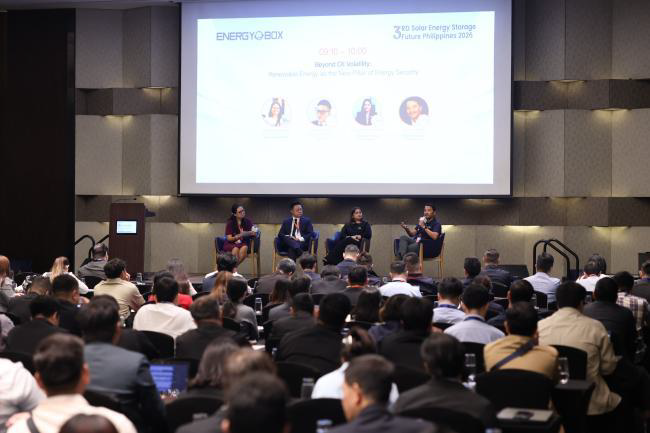
Industry leaders participating in the conference agreed that renewable energy is increasingly becoming an energy security tool rather than simply an alternative source of power.
During a panel discussion on energy security, speakers pointed to the Philippines’ continued exposure to imported fuel, electricity price volatility, and growing power demand. They noted that declining renewable energy costs and improvements in energy storage technologies are encouraging businesses to look beyond short-term savings and focus on long-term stability and risk management.
The discussion also highlighted the importance of battery storage in supporting the country’s transition to a cleaner energy mix.
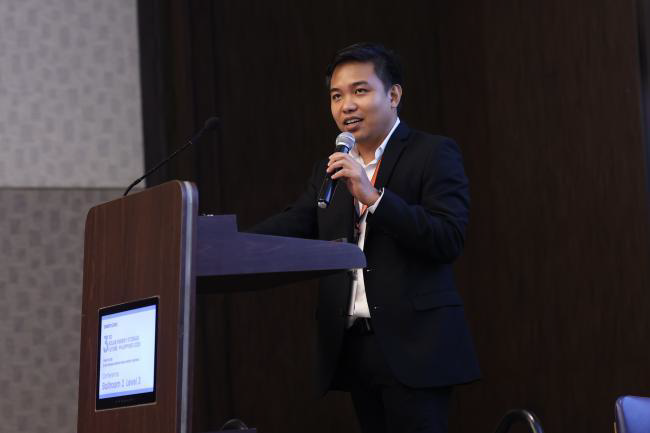
Cristian Dave Bermudo, Sales Director of HyperStrong, said the Philippines’ target of achieving 35% renewable energy penetration by 2030 and 50% by 2040 will require greater grid flexibility and more advanced energy storage systems. He noted that battery storage can help balance the intermittency of solar and wind generation while improving system reliability.
Financing emerged as another major topic during the conference.
Panelists also cited policy certainty and grid readiness as critical requirements for attracting capital.
Developers, investors, and financial experts agreed that the long-term success of utility-scale solar and storage projects will depend on stable revenue mechanisms, clear regulations, and improved market structures. Speakers identified energy storage as a key factor in improving project economics through revenue stacking strategies that combine electricity trading, ancillary services, and capacity payments.
During discussions on investment trends, experts said investors continue to monitor regulatory stability, transmission constraints, and long-term revenue visibility when evaluating solar and storage projects in the Philippines. They expect capital to continue flowing toward utility-scale solar-plus-storage developments over the next two years.
Distributed energy solutions also received significant attention.
Industry representatives described solar-plus-storage systems as an increasingly important component of the country’s energy security strategy. While demand from commercial and industrial customers continues to grow, speakers noted that grid interconnection costs and regulatory issues remain barriers to wider adoption.
The conference also explored the role of digitalization and artificial intelligence in the future power system.
Experts said AI-driven forecasting, monitoring, and dispatch systems are becoming essential tools for managing renewable energy assets and improving operational performance. As renewable penetration rises, digital technologies are expected to play a larger role in maintaining grid stability and maximizing asset value.
The event concluded with industry awards recognizing contributions to renewable energy development and energy storage deployment.
Among the awardees were Mabuhay Energy Corporation President and CEO Jacqueline Castillo, who received the Green Energy Prominent Women Award, and Netsolar Vice President Lance Elison Dy, who received the Renewable Energy Leader of the Year Award.
As solar and battery storage projects move from planning to deployment, discussions at the conference underscored a common message: the Philippines’ energy transition will depend not only on new capacity, but also on stronger grids, clearer policies, smarter technologies, and sustained investment.