The small solar project testing a big idea for Philippine agriculture
- May 30, 2026
- 0
In an industry dominated by gigawatt-scale ambitions and billion-peso investments, Batangas Agrivoltaic Inc. is pursuing something much smaller — and potentially much more personal.
The company’s agrivoltaics pilot in Batangas is only 20 kilowatts, small enough to power roughly 12 homes. But for Michael Anthony Becker, CEO of Batangas Agrivoltaic Inc., the project’s significance lies less in its size and more in the idea it is trying to prove: that solar development and farming do not necessarily have to compete for the same land.
A project measured differently

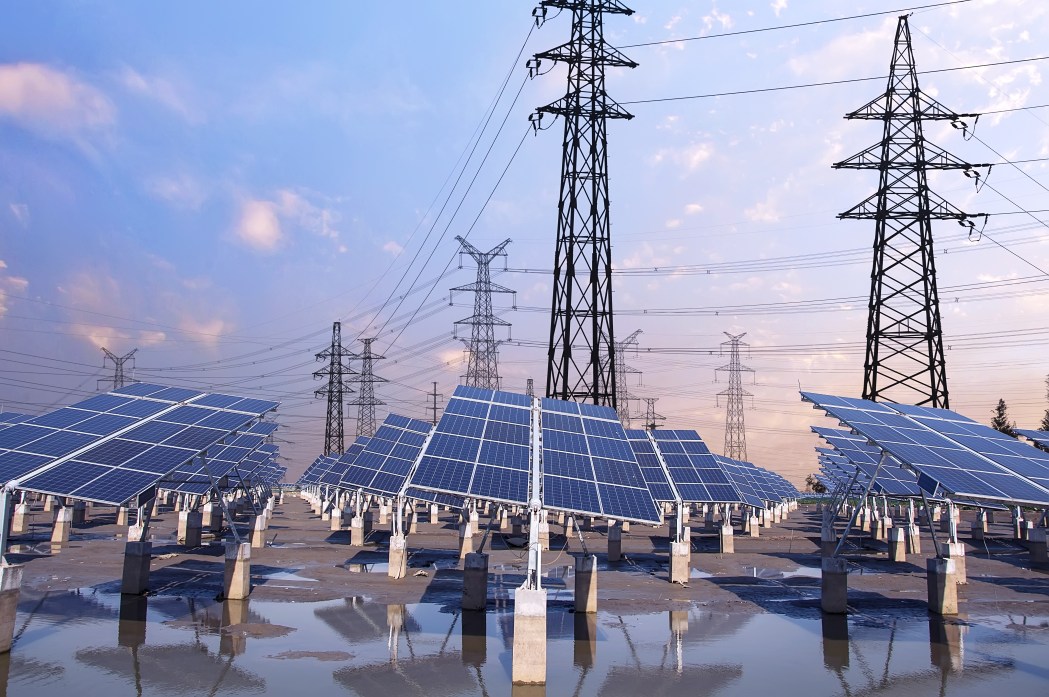
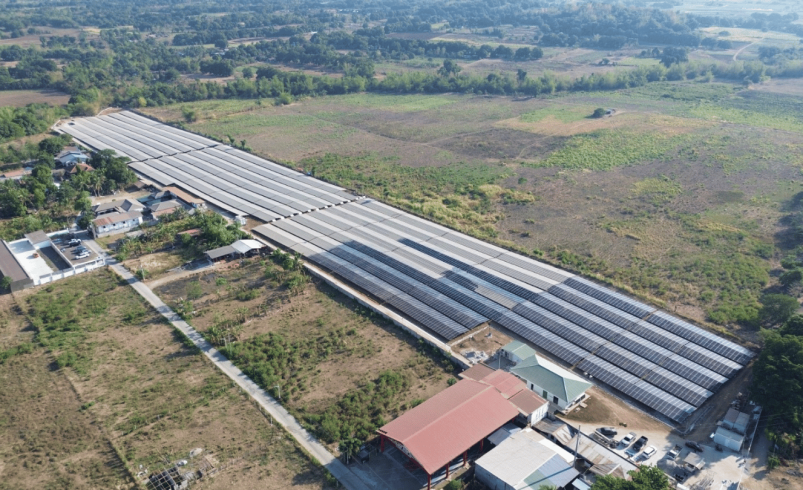
The agrivoltaics component forms part of the company’s broader 7.3-megawatt solar project in Batangas, which is nearing completion.
But compared to conventional utility-scale developments, the pilot itself is tiny.
“That’s nothing,” Becker said with a laugh while discussing the project’s 20-kilowatt capacity.
Then he quickly reframed it.
“Good for 12 families.”
For Becker, the point is not to compete with large solar farms on scale. Instead, the pilot is intended to explore how agricultural activity can continue beneath solar panels, allowing land to serve multiple purposes at once.
Farming beneath the panels
Unlike large commercial farming operations, the agricultural side of the project is meant to remain deeply local and practical.
Residents living near the site already grow crops and raise animals in the area, and Becker said the company has little interest in disrupting that.
“The idea is for them to continue that,” he said.
Rather than introducing unfamiliar crops or imposing a commercial farming model, Becker said locals will largely decide how the land beneath the panels is used.
Papaya trees, peppers, moringa, and even chickens have all been discussed as possible uses for the shaded spaces under the installation.
Trusting the people who know the land
For Becker, one of the project’s guiding principles is that the people already living and farming on the land understand it better than developers do.
“Their experience farming that specific land is much greater than my experience,” he said.
That philosophy has shaped the company’s approach to the pilot. Instead of maximizing every square meter for profit, the project is being treated more as a shared community space where energy generation and existing livelihoods can coexist.
A different vision of land use
The concept behind agrivoltaics is relatively simple: solar panels are spaced strategically so sunlight can still reach the ground beneath them.
According to Becker, this allows agricultural activity to continue even while the land generates electricity.
“You can have up to 60% of your agricultural output… while having 80% of your solar output,” he explained.
For Becker, the idea challenges the assumption that farmland converted for renewable energy must stop being productive agricultural land altogether.
Instead, he sees agrivoltaics as a way of layering multiple uses onto the same space.
An experiment with bigger implications
Despite its small size, the pilot touches on much larger questions surrounding renewable energy development in the Philippines.
As solar projects continue expanding nationwide, concerns over the loss of farmland and the displacement of agricultural communities have become increasingly common.
Becker believes agrivoltaics may offer a middle ground — though he acknowledges the model still faces economic and regulatory challenges.
“It can really work,” he said.
For now, Batangas Agrivoltaic’s project remains modest in scale. The company is still waiting for final equipment needed before connecting its larger solar development to the grid, while expansion plans for a second lot remain tied to land reclassification approvals.
Still, Becker appears comfortable with the project being small, at least for now.
In an industry often defined by bigger numbers and larger capacities, the company’s agrivoltaics pilot is trying to prove something less measurable: that renewable energy development can leave room for the communities and livelihoods already rooted in the land beneath it.
As renewable energy projects continue expanding across the country, could small agrivoltaics pilots like this help show that farming and solar development do not have to compete for the same land?
Follow Power Philippines on Facebook and LinkedIn or join our Viber community for more updates.