OAP2026 in Kuala Lumpur Highlights a New Cycle for Offshore Engineering and FPS Projects in Asia-Pacific
- February 26, 2026
- 0
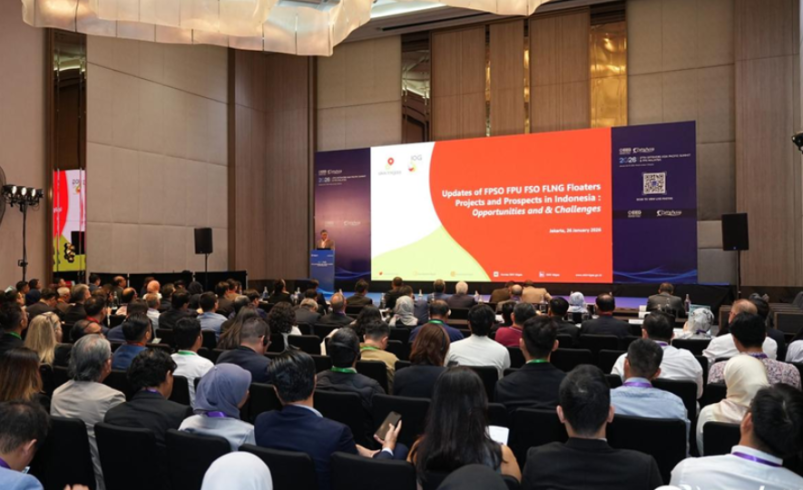
The 27th Offshore Asia Pacific Summit & FPS Malaysia (OAP2026) was held in Kuala Lumpur on 26–27 January, bringing together senior executives and project leaders from operators, EPC/EPCIC contractors, shipyards, engineering firms, and equipment suppliers. Discussions focused on regional upstream investment trends, FPS project development opportunities, decarbonization pathways, digital delivery systems, and the restructuring of regional supply chains.
Southeast Asia Projects Continue — but Cost Pressures Are Reshaping Economics
During the opening sessions on regional markets and upstream investment, speakers including Mustafa Akbar Reza (MPRC), Zain Zakwan Zainai (PETRONAS MPM), and Eva Fadlila (Pertamina Malaysia E&P) emphasized that Southeast Asia is not facing a shortage of projects. Instead, the fundamental economics of project development are changing.

Julius Wartno, Commissioner of Pertamina Internasional EP, noted that opportunities in FPSO, FPU, FLNG, and FSRU projects in Indonesia continue to coexist with rising development complexity and cost pressures. Traditional models based on economies of scale are becoming less effective, forcing developers to reassess project structures and risk allocation.
Supply Chain Control Emerges as the Core Risk Factor for FPS Projects
A high-level roundtable chaired by Daniel Purba, Chairman of PT Badak NGL, highlighted a growing industry consensus: the primary uncertainty in FPS projects now lies less in reservoir or design risks and more in supply chain controllability.
Participants including Budi Mawardi Nasron (PETRONAS MPM Sabah), Loong Yee Koh (PTTEP Malaysia Sabah), Musti Juin (SMJ Energy), Mateus da Costa (Timor Gap), and Zahris Sham Abu Musa (MOGSC / SLB Malaysia) discussed challenges such as distorted delivery schedules for critical equipment, unclear interface responsibilities in multi-tier subcontracting structures, and the downward transfer of risks under EPC/EPCIC models.
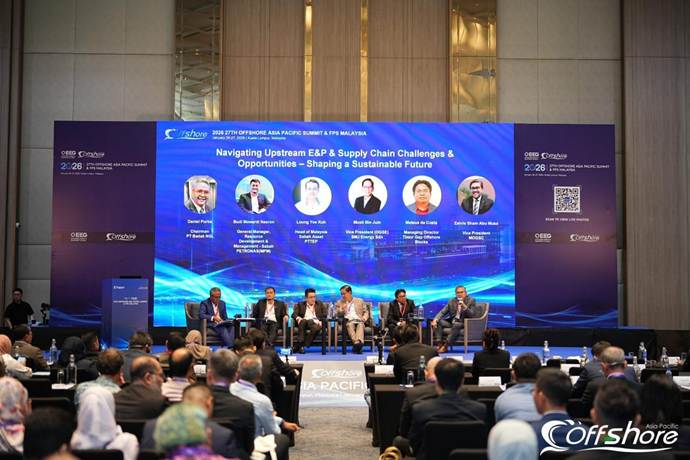
Budi Mawardi Nasron stressed that many recent project delays were not caused by technical infeasibility, but by fragmented execution and weak supply chain coordination. Loong Yee Koh added that operators are increasingly moving away from lowest-price tendering, placing greater emphasis on proven delivery records and long-term performance.
Reframing the Debate on Chinese and Asian Contractors
The first day concluded with a strategic roundtable on “China and Southeast Asia FPS Markets and Project Execution Outlook,” moderated by Kevin Tan, Senior Vice President of Project Delivery and Supply Chain at Yinson Production.
Panelists including Julius Wartno (Pertamina Internasional EP), Liguo Bai (Hanwha Offshore Singapore), David Wu (OceanSTAR Elite), and Paul Tan (Wison New Energies) examined whether Asian contractors can sustain reliable delivery of increasingly complex FPS projects.
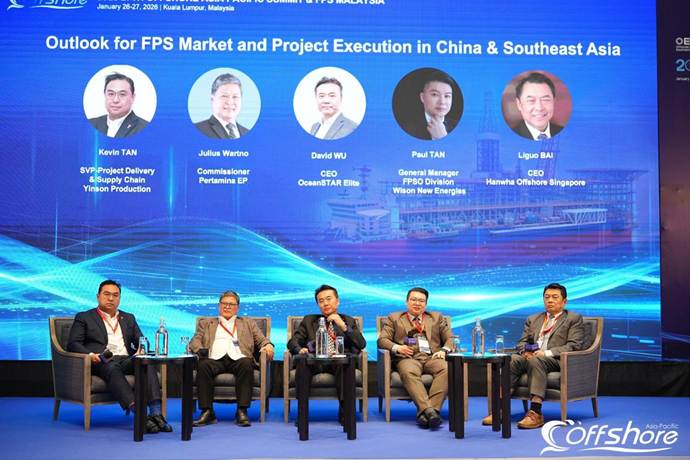
While construction capacity, modularization capability, and cost competitiveness have been widely recognized, project owners are now more concerned with contractors’ ability to manage complex interfaces, coordinate multi-regional supply chains, and systematically identify and mitigate project risks under EPCIC frameworks.
AI and Decarbonization Move from Concepts to Engineering Practice
Energy transition, low-carbon development, and digitalization featured prominently throughout the agenda, but discussions were notably more pragmatic and engineering-driven.
Gilles Lamerie, Global Subcontracting Director at SBM Offshore, presented standardized FPSO design and execution pathways aligned with near-zero-emission targets. Biswdeep Das, Vice President at McDermott International, shared global best practices in large-scale offshore EPCIC delivery. KBR, Seatrium, and Black & Veatch explored engineering challenges associated with floating ammonia facilities and next-generation FLNG/FSRU systems.
Collectively, these sessions reflected a shift from conceptual discussions to implementation-focused strategies.
Launch of the Global Floating Offshore Supply Chain Report and Selected Supplier Directory
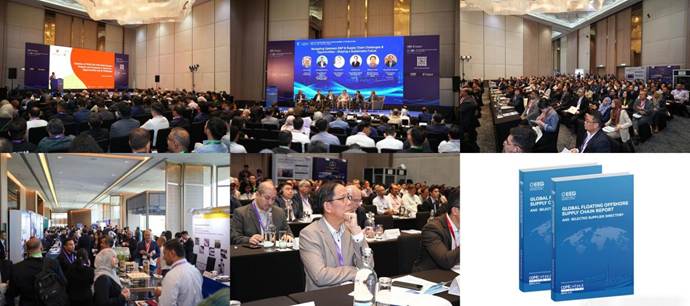
During the conference, the organizer officially launched the Global Floating Offshore Supply Chain Report and Selected Supplier Directory initiative.
The project aims to map the global floating offshore engineering value chain and establish a reusable supplier evaluation and screening framework for international projects. It is designed to support procurement decision-making for energy companies, EPCIC contractors, engineering institutes, and shipyards by improving transparency and risk management.
The initiative adopts an open co-development model. Energy companies, EPCs, design institutes, and shipyards participate as demand-side contributors. Manufacturers and equipment suppliers enter the research pool as candidate enterprises. Industry experts and research institutions support methodology development and peer review to promote industry-wide consensus.
The final report and directory will be officially released at Offshore Energy & Equipment Global Conference (OEEG2026) in Shanghai on 17–19 November 2026.
Dedicated Procurement Matchmaking: Connecting Directly with Real Project Demand
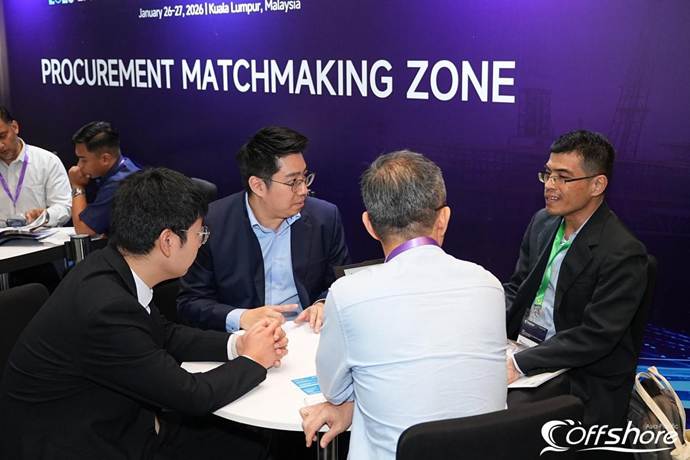
OAP2026 featured a dedicated procurement matchmaking program focused on active FPSO, FLNG, FSRU, and offshore engineering projects.
Demand-side participants included PETRONAS, OceanSTAR Elite Engineering, MODEC, Shapoorji Pallonji, MMHE, and PTSC, represented by senior professionals responsible for procurement and supply chain management.
The sessions were structured around concrete project scenarios and clearly defined requirements, covering critical equipment, system integration, engineering services, and delivery capabilities. Multiple rounds of targeted one-on-one meetings enabled focused and results-oriented engagement.
Post-Conference Site Visits: From Conference Hall to Project Sites
Following the conference, selected delegates joined a three-day technical and industrial site visit program tracing real project delivery pathways.
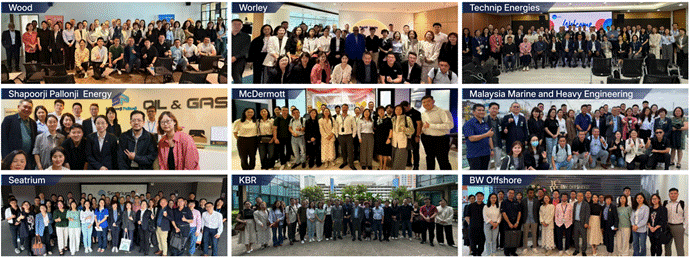
The first day focused on Kuala Lumpur’s engineering cluster, with visits to Wood, Worley, Technip Energies, Shapoorji Pallonji, and McDermott International, addressing front-end engineering definition, system integration complexity, and early-stage risk management.
On the second day, the delegation visited MMHE’s shipyard in Johor to examine the construction and conversion of large floating facilities. The third day in Singapore included visits to Seatrium, KBR, and BW Offshore, offering perspectives on system integration, process engineering, project investment, and long-term operations.
Building an End-to-End Collaboration Platform for Asia-Pacific Offshore Engineering
From high-level strategic debates to targeted procurement engagement and on-site technical visits, OAP2026 delivered an integrated platform covering the full value chain of floating offshore engineering in Asia-Pacific.
Rather than relying on broad slogans, the conference established a practical “dialogue–connection–execution” ecosystem linking project owners, contractors, and suppliers.
Building on this foundation, OEEG2026 in Shanghai will continue this momentum by leveraging the Yangtze River Delta’s industrial hub, bringing together global offshore stakeholders and fostering deeper cross-regional collaboration. The event aims to further support high-quality, sustainable development across the global offshore engineering sector.