Energy storage emerges as critical tool for Philippines’ 50% renewable energy goal
- June 1, 2026
- 0

Industry leaders say battery energy storage systems are becoming indispensable to the country’s clean energy transition, helping stabilize the grid and support higher levels of solar and wind power as the Philippines works toward a 50% renewable energy share by 2040.
As renewable energy deployment accelerates across the Philippines, industry leaders are increasingly viewing battery energy storage not as a supporting technology, but as a critical component of the country’s future power system.
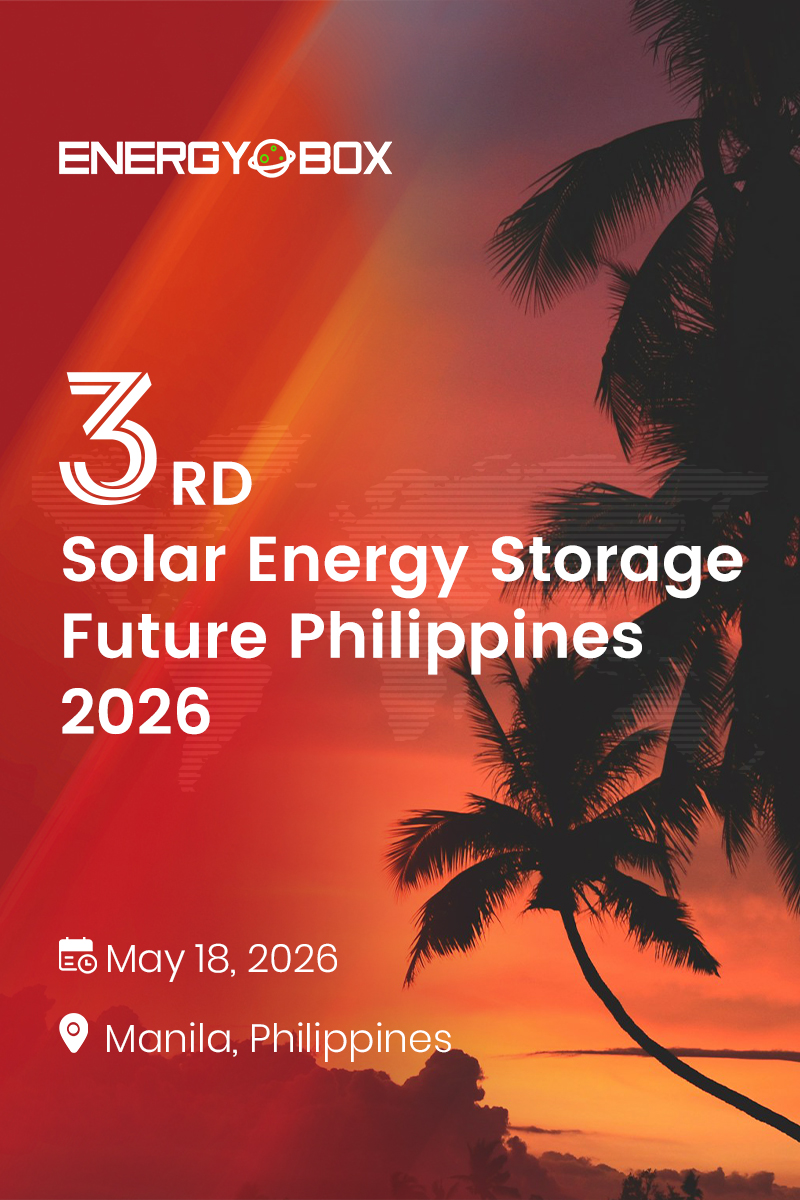
That message emerged during the 3rd Solar and Energy Storage Future Philippines 2026 conference in Manila, where more than 300 energy executives, investors, policymakers, utilities, and technology providers gathered to discuss the next phase of the country’s energy transition.

Opening the conference, Department of Energy Undersecretary Mylene Celestino Capongcol highlighted the Philippines’ long-term renewable energy ambitions and the growing role of storage in achieving them.
The Philippines plans to add 25 GW of renewable energy capacity between 2027 and 2035. The country has also identified more than 90 GW of solar potential and continues to roll out programs such as the Green Energy Auction Program (GEAP), Green Energy Option Program (GEOP), and net metering to accelerate clean energy investments.
As renewable energy capacity grows, maintaining grid stability is becoming a bigger challenge.
Capongcol noted that energy storage will serve as a critical enabler for integrating larger volumes of solar and wind power into the grid. The government now requires large-scale renewable energy projects to include at least 20% energy storage capacity to support reliability and system flexibility.
Industry participants said battery storage is becoming increasingly important as the country pursues its target of achieving a 35% renewable energy share by 2030 and 50% by 2040.
Cristian Dave Bermudo, Sales Director of HyperStrong, said the rapid growth of utility-scale solar and wind projects is placing greater demands on grid flexibility.
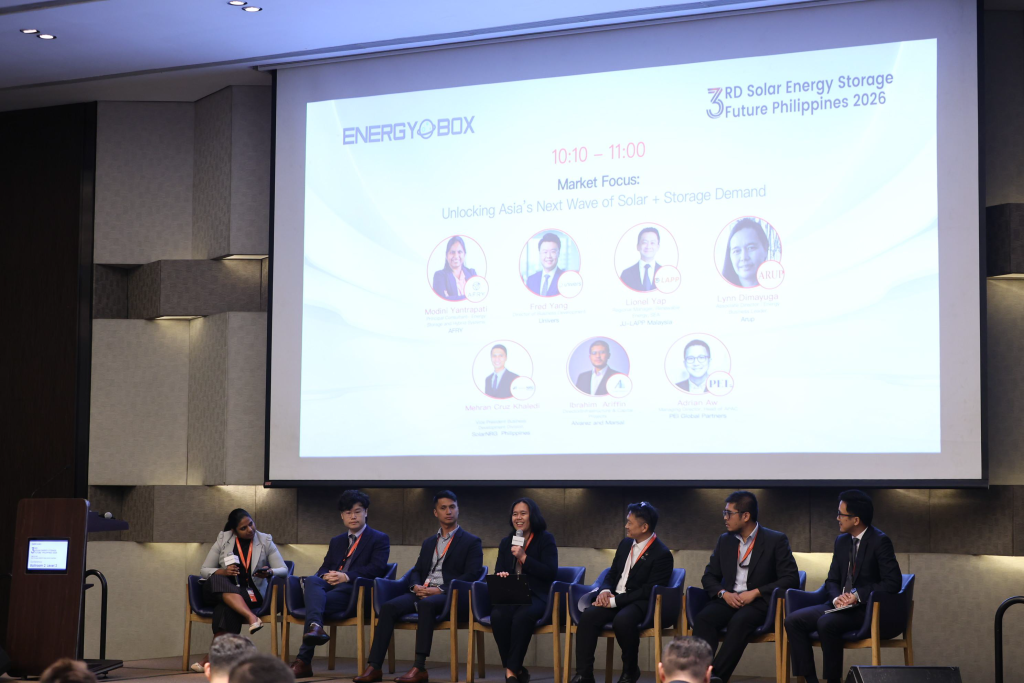
He pointed to Grid-Forming energy storage systems as a key technology that can help maintain system stability while enabling higher levels of renewable energy integration.
Beyond technical performance, storage is also becoming central to project economics.
During discussions on utility-scale renewable energy projects, developers and investors agreed that energy storage can improve revenue flexibility and enhance overall project value. Speakers noted that battery systems allow project owners to participate in multiple revenue streams, including electricity trading, ancillary services, and capacity mechanisms.
This ability to generate additional income is helping improve the bankability of renewable energy projects.
Industry experts said financing decisions are increasingly influenced by a project’s ability to secure stable, long-term revenue and manage operational risks. Energy storage is emerging as a key factor in meeting those requirements.
The role of storage extends beyond large power plants.
Speakers also highlighted growing opportunities for distributed solar-plus-storage systems in commercial, industrial, and island markets.

During a panel discussion on energy security, participants said distributed energy resources are gradually shifting from supplementary power sources to critical infrastructure. In an archipelagic country like the Philippines, solar and storage combinations can help improve energy access, reduce fuel dependence, and strengthen resilience in remote communities.
Microgrid applications are already demonstrating these benefits.
Representatives from Jiangsu Linyang Energy Storage Technology shared examples of solar-storage-diesel hybrid projects, including developments in Palawan and Semirara Island. According to the company, these projects have displaced more than 50% of diesel consumption while improving power reliability and lowering energy costs in off-grid areas.
As storage deployments increase, digital technologies are expected to play a larger role in maximizing performance.
Experts at the conference said artificial intelligence, real-time monitoring, and advanced dispatch systems are becoming essential tools for managing renewable energy assets. These technologies can improve forecasting, optimize battery operations, and support more efficient grid management.
While challenges remain, industry leaders agreed that energy storage is becoming a cornerstone of the Philippines’ energy transition.
Clearer regulations, stronger market mechanisms, and continued investment will still be needed to accelerate deployment.
Yet the conference underscored a growing consensus across the sector: achieving higher levels of renewable energy will depend not only on building more solar and wind projects, but also on deploying the storage systems needed to keep the lights on when the sun is not shining and the wind is not blowing.