Philippines prepares for post-Malampaya era with natural gas, renewable energy push
- June 30, 2026
- 0

The Philippines is accelerating efforts to secure its energy future as the Malampaya gas field nears expected depletion, with government and industry leaders emphasizing the need to expand indigenous natural gas resources while strengthening renewable energy deployment.
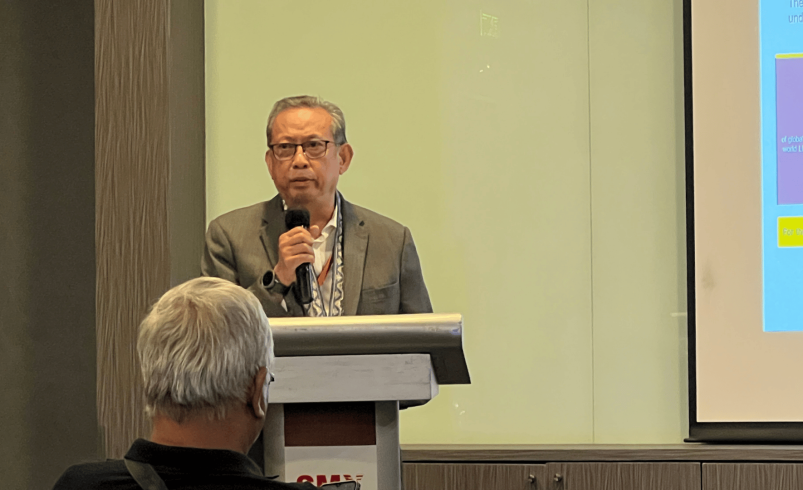
In a forum titled “Navigating the Post-Malampaya Era: Securing the Philippines Natural Gas Future,” Philippine Energy Research Institute Executive Board Member, Atty. Richie Avigale Ramos-Pilares, described Malampaya as a cornerstone of Luzon’s electricity supply, contributing more than 20% of the Luzon grid.
“We want indigenous because if we stick to indigenous, of course, we will avoid the shipping and the transportation, and even the processing involved there,” she said at the 9th Oil and Gas Philippines Expo 2026, underscoring the importance of maximizing the country’s own natural resources.

Ramos-Pilares, who is also the co-head of DivinaLaw’s Energy practice group, noted that recent discoveries at Malampaya have increased domestic reserves: Malampaya East-1 added 98 billion cubic feet of proven gas, while Camago-3 is estimated to be 2.5 times larger.
“When we say 98 billion cubic feet, while it sounds big, it only translates to 12 years of 100 megawatts of energy from natural gas, or 2.5 years to 3 years of 500-megawatt plant,” she said.
While relatively modest in size, the lawyer said that these discoveries significantly extend the life of the Malampaya field, potentially pushing its operational lifespan to around 2034.
RA 12120 and LNG development
Ramos-Pilares also highlighted Republic Act (RA) No. 12120, or the Philippine Natural Gas Industry Development Act, a key development supporting the energy sector.
Signed into law in January 2025, the law establishes the legal framework for the Philippine natural gas industry by regulating the permitting, construction, operation, and decommissioning of downstream natural gas facilities, and classifies these facilities as either own use or third-party access.
“This particular regulation explicitly stated that natural gas will be the transition fuel that will help us to clean energy,” Ramos-Pilares said, noting that it also helps address the intermittency of renewable energy during the energy transition.
Under RA No. 12120, the DOE is tasked to accredit participants, develop and regularly update the Philippine Natural Gas Development (PNGD) plan, and issue key codes to support a competitive market structure.
It also provides fiscal incentives to encourage investment, including VAT exemptions for indigenous natural gas transactions and eligibility for tax incentives under the Corporate Recovery and Tax Incentives for Enterprises (CREATE) law for certified PNGD facilities.
Ramos-Pilares also underscored the country’s first integrated liquified natural gas (LNG) facility, developed through a consortium involving Meralco PowerGen Corporation, AboitizPower, and San Miguel Global Power.
“When we say integrated, it means what they’re doing is they’re connecting the terminal processing directly to the generation and delivering competitively priced base-load power,” she explained, adding that the consortium received approval from the Philippine Competition Commission and achieved full financial flows in January 2025.
Energy affordability and security
During the question-and-answer session, participants raised concerns about energy affordability and the country’s dependence on imported LNG. Responding to a question about sustainability, Ramos-Pilares stressed that local gas development remains the preferred long-term strategy.
“For natural gas, we really have to discover indigenous gas because unfortunately, if we rely on imported LNG, it will not be sustainable for the country,” the lawyer said.
She also emphasized the importance of creating a stable investment environment for upstream exploration.
“Any investor, whether in upstream or renewable energy, they just want predictability. And also consistency in terms of how easy it is to get a permit, the timeline,” she said.
Ramos-Pilares then maintained that natural gas should not compete with clean energy but support its expansion.
“LNG and renewable energy should complement each other, but the priority is still renewable energy and BESS (battery energy storage systems),” she said, adding that BESS can help manage the intermittency of renewable energy, along with smart grid technologies.
While multiple solutions exist beyond LNG, Ramos-Pilares highlighted that these technologies are intended to support and complement the growth of renewable energy, which remains the priority as the most sustainable energy source.
Follow Power Philippines on Facebook and LinkedIn or join our Viber community for more updates.