Energy projects must withstand disruptions from day one, speakers say
- July 2, 2026
- 0
Energy projects in the Philippines must be designed to withstand disruption from the start, speakers at the Philippine Infrastructure and Construction Club (PICC) Energy Leadership Forum said, as the country faces overlapping risks from disasters, fuel supply shocks, and rising demand.
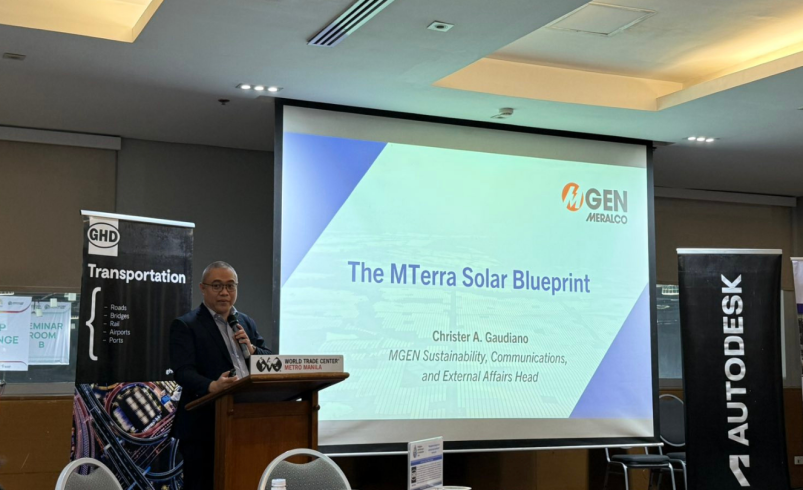
Speaking during PhilEnergy Expo 2026, Patricia Tirados, Director of Business Development–Energy at engineering and professional services firm GHD, said recent disruptions showed that resilience should be treated as a design issue, while Meralco PowerGen Corporation (MGEN) Sustainability, Communications, and External Affairs Head Atty. Christer Gaudiano said large-scale renewables with storage can help build a more dependable and sustainable power system.
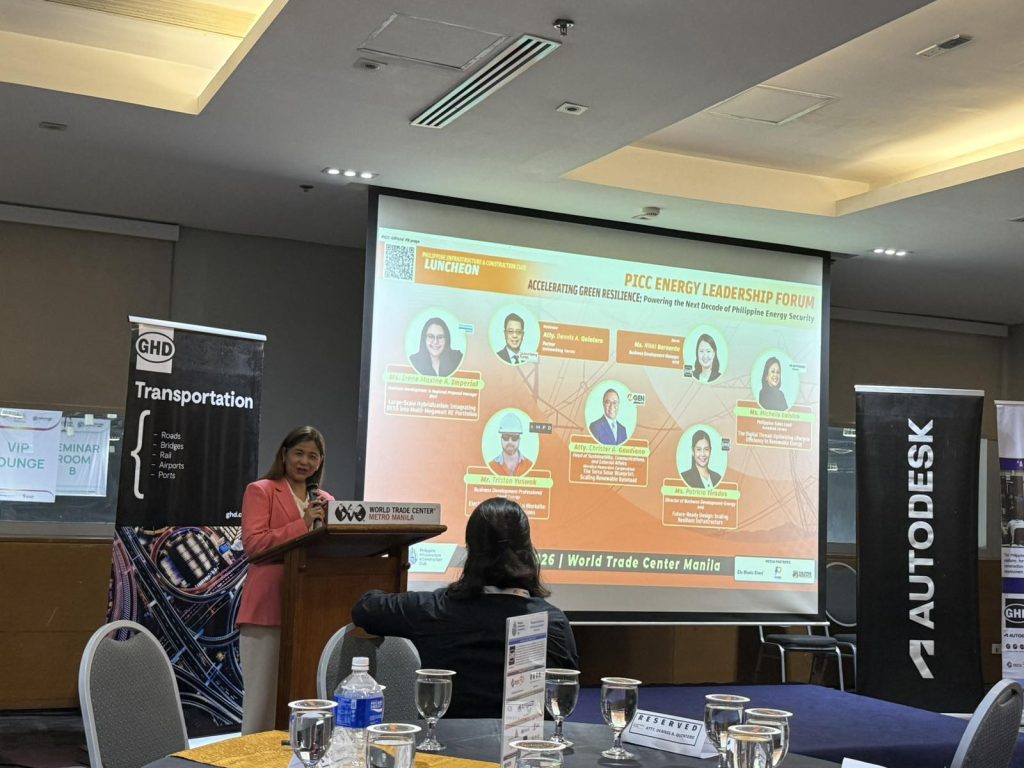
The forum, held during the third day of the expo at the World Trade Center Metro Manila, carried the theme “Accelerating Green Resilience: Powering the Next Decade of Philippine Energy Security.”
Tirados cited the June 8 earthquake in southern Mindanao, which was felt in General Santos City and nearby areas, as an example of how disasters can expose weaknesses in energy infrastructure. She said the earthquake left 800,000 homes without power and took 537 MW out of the system.
“This is not just another natural disaster story. This is a design story,” Tirados said.
She said recent shocks did not create the country’s energy vulnerabilities, but exposed weaknesses that were already present. These include fuel supply risks, grid stress, and the impact of climate and disaster-related disruptions.
Tirados said the Philippines needs energy infrastructure that continues working during disruptions, not only systems that can be repaired afterward.
“We don’t just need more energy during that collapse. We need a system that works during a disruption, not after it,” she said.
Tirados proposed a “6D resilience framework” for energy infrastructure, covering design, diversification, distribution, digitization, de-risking, and deployment.
She said resilience should start at the planning stage, rather than after a project has already been built. Diversification, she added, can help reduce dependence on single fuel sources, supply routes, asset types, or ownership structures.
Tirados also said the country’s archipelagic geography should be treated as an advantage for distributed energy systems, while digitization can support real-time monitoring, automated switching, and demand response. However, she cautioned that smarter grid systems must also be protected against cybersecurity risks.
On de-risking, Tirados said technically strong projects will not move forward if they cannot secure financing. She also said the Philippines must move faster from pilots to scaled deployment, noting that the country already has technology, investment appetite, and policy signals, but still needs stronger execution.
“The Philippines doesn’t have a vision problem. We have a deployment challenge,” Tirados said.
Gaudiano, for his part, said sustainability in the power sector should not be limited to environmental programs, but should include the development of energy systems that future generations can depend on.
“For us at MGEN, sustainability is about managing the energy trilemma responsibly. We need reliable supply, we need to remain competitive, and we need to keep building a cleaner energy over time,” he said.
He said the energy transition cannot be treated as a simple shift from one technology to another, as the power system still needs reliable and affordable supply while cleaner energy sources are developed.
Gaudiano said renewables are not yet baseload power in the traditional sense, but large-scale projects paired with storage can allow renewable energy to play a more dependable role in the grid.
He cited MTerra Solar as an example of how scale, battery storage, and system coordination can help make solar energy more useful beyond daytime generation.
The project will have 3,500 MWp of solar photovoltaic capacity and 4,500 megawatt-hours of battery energy storage. Gaudiano said it is expected to supply renewable energy to 2.4 million households and avoid around 4.3 million tons of carbon emissions annually once completed.
MTerra Solar is also expected to deliver 850 MW of mid-merit supply to Meralco. Mid-merit supply refers to power used during moderate to high-demand periods, between steady baseload supply and short-duration peaking power.
Gaudiano said battery storage allows solar energy to be dispatched beyond its usual generation window, including during evening demand hours.
“That matters because this is where renewable energy begins to move from being just an addition to the capacity, to being system-relevant capacity,” he said.
He added that every megawatt generated from renewable sources such as MTerra Solar reduces exposure to imported fuel, foreign exchange movements, shipping constraints, and global supply disruptions.
Gaudiano also said MTerra Solar began delivering power to the Luzon grid 16 months after groundbreaking, showing that large renewable energy projects can be built quickly in the Philippines.
“The milestone actually shows the direction that we are moving forward. Cleaner capacity that is not only planned on paper but is actually being delivered to the grid,” he said.
He said the project’s blueprint rests on scale, storage, and system readiness, with generation, transmission, distribution, market systems, permitting, and communities all needing to work together.
Both speakers also pointed to the need for energy projects to benefit communities. Gaudiano said MTerra Solar includes programs that provide training, jobs, marketplace opportunities, and solar streetlights for host communities.
Tirados said the country must move from repeatedly recovering after shocks to building systems that can withstand them from the start.
The shared message from the forum was that the next decade of Philippine energy security will depend not only on adding capacity, but on building projects that are reliable, affordable, cleaner, resilient by design, and fast enough to meet real-world risks.
Can the Philippines build energy projects fast enough while making them resilient enough for the disruptions ahead?
Follow Power Philippines on Facebook and LinkedIn or join our Viber community for more updates.