Mindanao consumers warn Agus-Pulangi rehab JV may push power rates higher
- March 23, 2026
- 0
Consumer groups in Mindanao are warning that a proposed rehabilitation and joint venture arrangement for the Agus-Pulangi Hydroelectric Complex could drive electricity prices higher, as stakeholders scrutinize a PHP 69.72-billion unsolicited proposal to upgrade and operate one of the island’s most critical power assets.
The concerns were raised after a consortium of San Miguel Global Power Holdings and Sta. Clara International Corporation disclosed an unsolicited proposal, published on the Public-Private Partnership Center website, to rehabilitate, operate and maintain the government-owned hydroelectric complex.
“Power rates will definitely increase sharply, like what happened in other government generation plants sold to the big power companies,” said Dr. Melchie Ambalong, president of the Mindanao Power Consumers Federation (MINCOPOF), warning that privatization of generation assets has historically translated into higher pass-through costs for consumers.

Ambalong, a long-time critic of privatization of the Agus-Pulangi Hydroelectric Complex (APHC), said the government should retain ownership of the facility and undertake rehabilitation directly.
The complex currently generates over PHP 9 billion in annual revenues, she noted.
Ambalong acknowledged that this option may require legislative action, as the Electric Power Industry Reform Act of 2001 (EPIRA) mandates the sale of state-owned generation assets, except those in small island grids.
Consumer advocates also stressed the need for broader stakeholder participation in determining the future of the facility, which remains one of Mindanao’s lowest-cost power sources.
“Mindanaoans should have a say on how to rehabilitate the power complex, which was purpose-built by the government to provide the island with clean, affordable, and secure electricity,” said BenCyrus Ellorin, project director of the Consumers for Renewable Energy Action in Mindanao (CREAM), noting that further delays in the rehabilitation of the aging power complex risks operating the key power infrastructure to full depreciation or death.
Data cited by stakeholders show that Agus-Pulangi currently delivers some of the most competitive generation costs in the island at about PHP 3 per kilowatt-hour, significantly lower than the average blended rate of PHP 6.64/kWh in 2024.
The hydro complex also plays a central role in Mindanao’s power mix, which is currently about 70% dependent on fossil fuels such as coal and petroleum, while renewables account for around 30%, with hydropower contributing 22%.
The Agus-Pulangi Hydroelectric Complex consists of six cascading hydro plants powered by Lake Lanao, including facilities located in Marawi City, Saguiaran, Baloi, and Iligan City, while the Pulangi IV plant is located in Maramag, Bukidnon.
The oldest unit, Agus 6 (Maria Cristina Falls), dates back to the early 1950s. The system’s installed capacity is 1,001 megawatts, but current output has fallen to around 600 megawatts, or about 60% of capacity, due to aging infrastructure.
The issue remains politically sensitive, with proposals to amend EPIRA repeatedly filed in Congress over the years. President Ferdinand Marcos Jr. had earlier called for a review of the law in his 2024 State of the Nation Address, but legislative progress has remained limited.
A 2012 decision under former President Benigno Aquino III previously halted plans to privatize the Agus-Pulangi complex amid strong public opposition.
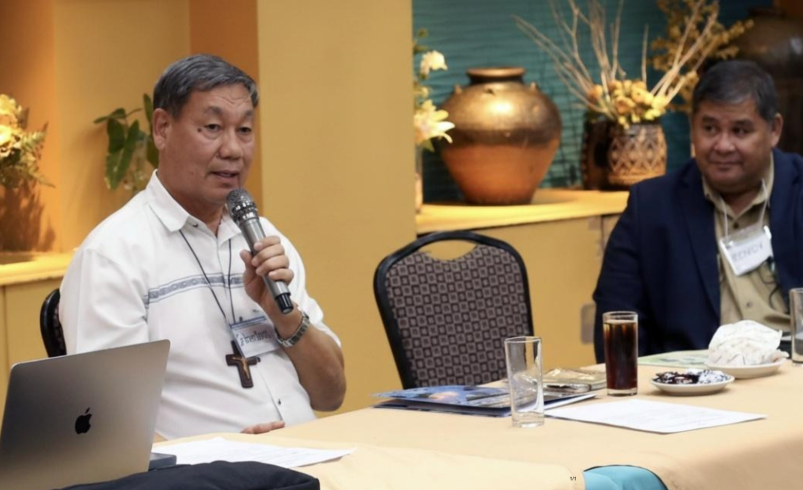
A consultation on the rehabilitation plan was held last March 18 in Cagayan de Oro, convened by the Mindanao Renewable Energy Acceleration and Coordination Hub (MINREACH), bringing together consumer groups, business representatives, civil society organizations, and faith-based groups to discuss the project’s implications.
Should the Agus-Pulangi rehabilitation be pursued through a private sector-led joint venture, or should the government retain full control to protect Mindanao’s long-term power pricing stability?
Follow Power Philippines on Facebook and LinkedIn or join our Viber community for more updates.