Smart homes could help households reduce their carbon footprint by up to 30% — MPA engineer
- April 13, 2026
- 0
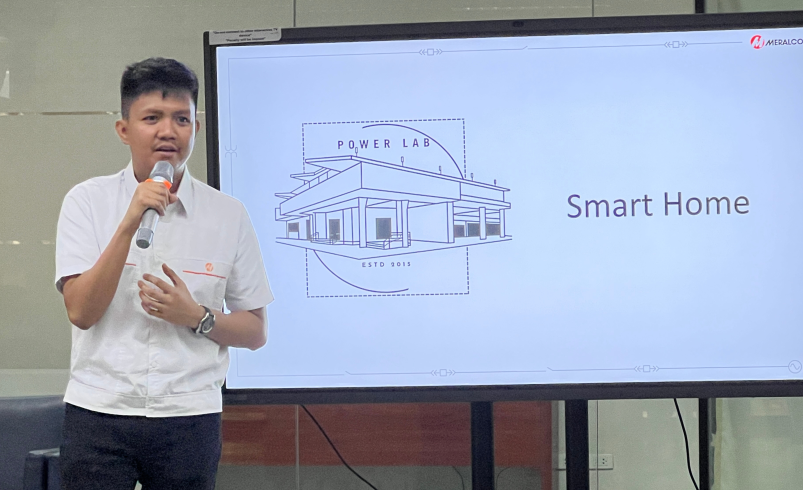
Smart home systems not only provide convenience and comfort, but also help households reduce their carbon footprint up to 30%, according to an engineer from Meralco Power Academy (MPA) during the second day of the Green Jobs Forum 3 on April 8 in Taguig City.
Titled “Turning Research Into Opportunities,” the two-day event was organized by the Philippine Energy Research and Policy Institute (PERPI) at the University of the Philippines Bonifacio Global City (UP BGC).
MPA’s Engineer Jose Angelo Angustia centered his lecture on smart home conversion, explaining the core features and benefits of smart homes.

He described smart homes as systems in which appliances can be remotely controlled, automated, and interconnected via the internet. Their basic features include remote access, automation through routines or voice commands, and device-to-device communication.
The engineer stressed that these capabilities ultimately support energy management, allowing households to monitor and optimize electricity usage.
“Modern smart home ecosystems can reduce a household’s carbon footprint. So, pwedeng ma-reach ‘yung carbon footprint mo, and even ‘yung whole household by up to 30% kapag na-reach mo na ‘yung autonomous energy management,” said Angustia. [Modern smart home ecosystems can reduce a household’s carbon footprint. You can potentially lower your carbon footprint, and that of your entire household, by up to 30% once you achieve autonomous energy management.]
He emphasized that smart homes not only offer convenience but also save energy by avoiding unnecessary consumption.
“Meron tayong tinatawag na motion sensor. Kapag wala na siyang na-detect na motion in your house, it will automatically turn off everything,” Angustia said. [There is what we call a motion sensor. When it no longer detects any movement in your home, it will automatically turn everything off.]
Smart homes can improve comfort by adapting to user preferences. For example, if the system learns that a user usually sets the temperature of their air conditioner to 25 degrees, Angustia said it can automatically maintain that setting while still optimizing energy use.
They can also enhance security via smart locks and cameras, and entertainment features like synchronized audio and voice announcements.
Solar systems and EV integration
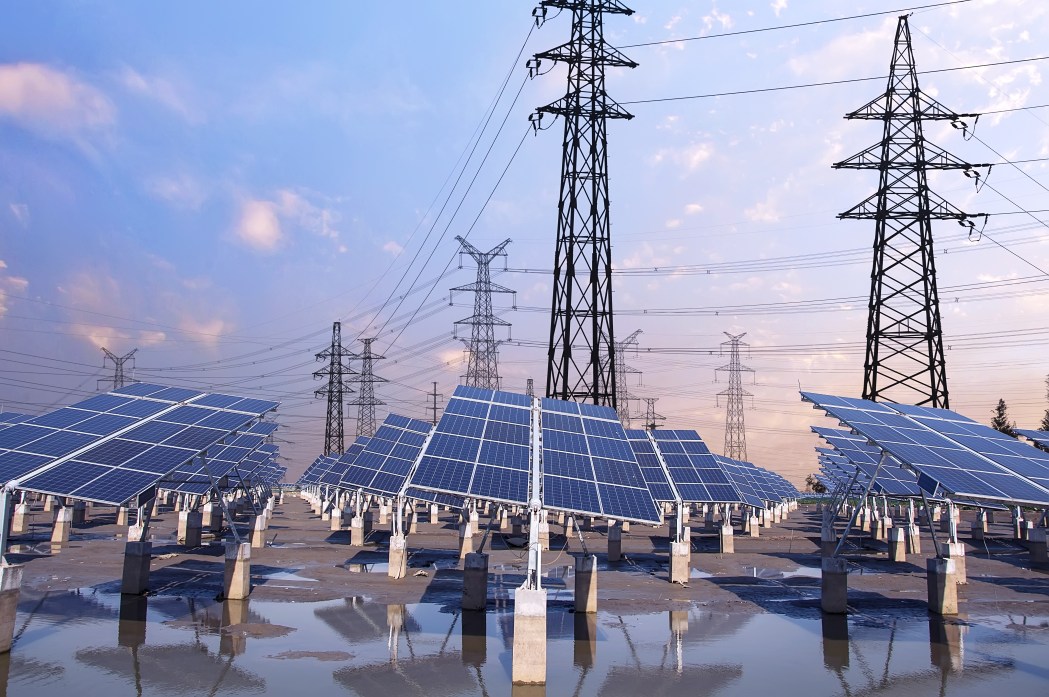
Smart homes also prepare households for solar and electric vehicle (EV) integration. According to Angustia, solar systems can be connected to smart home setups for better energy management, while EVs are becoming more popular as fuel prices in the Philippines rise.
To integrate solar into a smart home, Angustia said a person would need a solar battery first, and the system should be hybrid, meaning it can charge from solar panels or from the grid, and then supply power back to their home and even EVs.
“’Yung hybrid system, pwede siyang mag-manage ng four distinct scenarios. In daytime kung saan ‘yung production ng solar is greater than your consumption, ang mangyayari, ‘yung solar PV system niyo, ‘yun muna ‘yung magpa-power sa bahay niyo kasi may excess,” he explained. [The hybrid system can manage four distinct scenarios. During the daytime, when solar production is greater than your consumption, your solar PV system will be the one powering your home first because there is excess energy.]
Angustia noted that peak sun hours in a day are about 4.5 hours, allowing solar panels to generate their maximum power.
He highlighted that EVs can also function as a backup power source because of their built-in batteries. Through vehicle-to-load (V2L) technology, EVs can directly power household appliances such as refrigerators, lights, televisions, and laptops using an adapter.
“Ang capacity ng isang EV is nasa 46 kilowatt-hour (kWh), and for a normal residential home, ang daily consumption is nasa 7.2 kWh. Doing the math, it can actually power a home for five to six days kapag nawalan ng kuryente,” he said. [The capacity of an EV is around 46 kilowatt-hours (kWh), while a typical household consumes about 7.2 kWh per day. Doing the math, it can power a home for five to six days during a power outage.]
Angustia shared that building a smart home is accessible and does not require replacing all existing appliances.
He then brought up their “Smart Home Starter Pack,” which he described as a basic, low-cost entry setup designed to help users begin building a smart home system. It typically includes a smart speaker and an infrared (IR) blaster for around PHP 3,500.
When they tested the operating cost of these devices, Angustia said the Smart Home Starter Pack only adds about PHP 26 to the monthly electricity bill.
“So, smart plug, PHP 0.01 per hour lang, 1 cent. IR blaster, one of the most important devices in a smart home, only costs less than a cent to operate per hour. So, 1 cent siya for two hours of operation,” he said. [A smart plug costs only about PHP 0.01 per hour—just one cent. An IR blaster, one of the most important smart home devices, costs even less than a cent per hour to operate, or about one cent for every two hours of use.]
By 2026, Angustia said a smart home is no longer just about turning lights on automatically by 2026, but a system that can manage energy use, reduce electricity costs, and lower its carbon footprint through optimization and automation.
Follow Power Philippines on Facebook and LinkedIn or join our Viber community for more updates.