PH remains on track for first nuclear plant by 2032 —DOE
- June 16, 2026
- 0
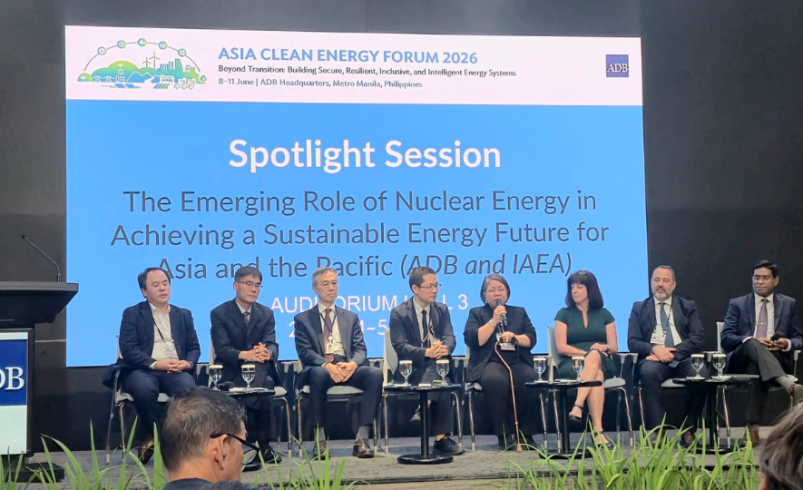
The Department of Energy (DOE) remains focused on bringing nuclear power into the Philippines’ energy mix by 2032 as the government advances preparations for a long-term nuclear program to support energy security and renewable energy integration.
Speaking at the 2026 Asian Clean Energy Forum (ACEF) last week, Energy Undersecretary Rowena Cristina Guevara said nuclear energy will play an important role in the country’s transition to a lower-carbon power system as renewable energy capacity continues to expand.
During her presentation, Guevara outlined the Philippines’ case for nuclear power, highlighting the country’s growing electricity demand, aggressive renewable energy targets, and the need for firm, dispatchable generation to support grid stability.

She said nuclear energy could provide both reliable power and ancillary services as more variable renewable energy sources are integrated into the grid, positioning it as a complement rather than a competitor to renewable energy.
“In the last 40 years, the Philippines mothballed the Bataan Nuclear Power Plant (BNPP). Not a single kilowatt-hour was used,” Guevara said during the panel discussion. “But in the next 40 years, we believe that nuclear energy is part of the energy transition. It will be used both for energy and for advanced ancillary services as we get massive variable renewable energy into our grid.”
The DOE is targeting a renewable energy share of 35% by 2030 and 50% by 2040, up from about 25% today.
She noted that recent Green Energy Auction rounds have secured significant renewable energy investments that will require additional technologies capable of supporting grid stability and reliability.
“What we have seen in the last two years with our Green Energy Auction.. we were able to get 20 gigawatts of renewable energy committed in the next five years,” Guevarra said.
“With all of those coming in, nuclear energy is going to be necessarily part of our power system,” she added.
On the sidelines, Guevara said the government is in the process of evaluating potential pathways for nuclear deployment, including the possible rehabilitation of the BNPP and newer reactor technologies.
“We are waiting for the finalization of the KHNP study for the BNPP, so we have not decided on that one yet,” she said, referring to the study being conducted by Korea Hydro & Nuclear Power.
Guevara also acknowledged that commercial deployment timelines for small modular reactors (SMRs) remain uncertain.
“SMRs, while it is very sexy, based on my conversation, they will become commercially available 2040 pa. But we want to build our first one in 2032,” she said, citing the government’s nuclear roadmap.
The Philippines has been strengthening its nuclear energy framework through regulatory development, capacity-building initiatives, and international partnerships as it explores nuclear power as a potential source of reliable, low-carbon electricity.
Do you think nuclear power can help the Philippines balance energy security, grid reliability, and its growing renewable energy ambitions? Join the discussion.
Follow Power Philippines on Facebook and LinkedIn or join our Viber community for more updates.